

by Rebecca Wallis
McMinnville, OR – December 22, 2025
A newly surfaced 911 recording involving a 17 year old McMinnville High School student is reshaping the public narrative surrounding a recent federal immigration enforcement incident in Yamhill County. The recording provides direct insight into what occurred and raises broader questions about whether public messaging by elected officials, advocacy organizations, and institutions contributed to confusion about what Oregon’s sanctuary laws actually permit.
In the call, the student acknowledges that he intentionally blocked a Border Patrol vehicle and contacted local law enforcement expecting police to intervene and stop federal agents. Those statements conflict with early claims that the student was detained without cause and highlight a growing misunderstanding among residents, particularly young people, about the limits of Oregon’s sanctuary protections.
That confusion was amplified by public statements suggesting federal immigration enforcement in Yamhill County was unlawful, despite Oregon law drawing clear distinctions between limits on local government cooperation and the authority of federal agencies.
What Oregon’s Sanctuary Laws Do and Do Not Do
Oregon has been a sanctuary state since 1987, with its laws codified under ORS 180.805 to 180.810 and ORS 181A.820 to 181A.829. Those laws were strengthened in 2021 with the passage of the Sanctuary Promise Act.
Guidance published by the Oregon Department of Justice makes clear that Oregon’s sanctuary laws are directed at state and local public bodies, not federal agencies and not private citizens.
Oregon sanctuary laws DO:
-
Prohibit state and local law enforcement from assisting in federal immigration enforcement without a judicial warrant
-
Require non judicial immigration enforcement requests from federal agencies to be documented, reported, and denied
-
Restrict public agencies from sharing nonpublic information for immigration enforcement purposes
Oregon sanctuary laws DO NOT:
-
Prohibit federal immigration authorities from operating in Oregon
-
Authorize civilians to interfere with federal officers
-
Require or allow local police to stop or block ICE or Border Patrol
-
Protect individuals from arrest or prosecution for obstructing federal law enforcement
The Oregon Department of Justice explicitly states that federal immigration authorities such as ICE and Border Patrol can and do operate in Oregon and that sanctuary laws do not stop deportations or federal prosecutions.
Public Messaging and Local Representation
Following the McMinnville incident, several public statements suggested that federal agents had acted unlawfully and that local authorities should have intervened.
Yamhill County Commissioner David King publicly shared and praised a November 24, 2025 letter issued by Oregon Attorney General Dan Rayfield and several county district attorneys, framing it as evidence that federal enforcement actions were unlawful and directly relevant to Yamhill County residents.
Yamhill County was not represented among the signatories to that letter.
The letter was signed by the district attorneys of Multnomah, Washington, and Clackamas counties. The Yamhill County District Attorney’s Office did not sign the letter, and Yamhill County was not listed among the jurisdictions asserting oversight or investigative authority.
Despite this, the letter has been cited locally as justification for alarm and claims of constitutional violations within Yamhill County, even though the document itself does not reference incidents in the county or include its prosecutor.
At the same time, the nonprofit Unidos Bridging Community Facebook page issued multiple rapid response alerts encouraging residents to report ICE activity and call a hotline during encounters. While framed as community support, the alerts focused on reporting and monitoring federal activity and did not provide detailed clarification about the legal limits on civilian involvement during active federal enforcement operations.
The 911 Call and Key Admissions
The full 911 recording, obtained by Yamhill County News, provides direct evidence of what occurred.
In the call, the student tells the dispatcher that he knowingly responded to a friend’s request for help and “blocked the SUV in front of him so he couldn’t get out,” acknowledging that the vehicle belonged to Border Patrol. He further stated that additional federal vehicles arrived after he blocked the initial unit, contradicting early claims that the encounter escalated without cause.
The student then asked local law enforcement whether there was anything officers could do to intervene, indicating an expectation that police could interfere with federal operations. The dispatcher declined to intervene and explicitly instructed the student not to engage with federal agents.
Local law enforcement did not assist ICE or Border Patrol in the incident. But under Oregon law, they also lacked authority to stop federal agents from carrying out their duties.
School District Response and Community Impact
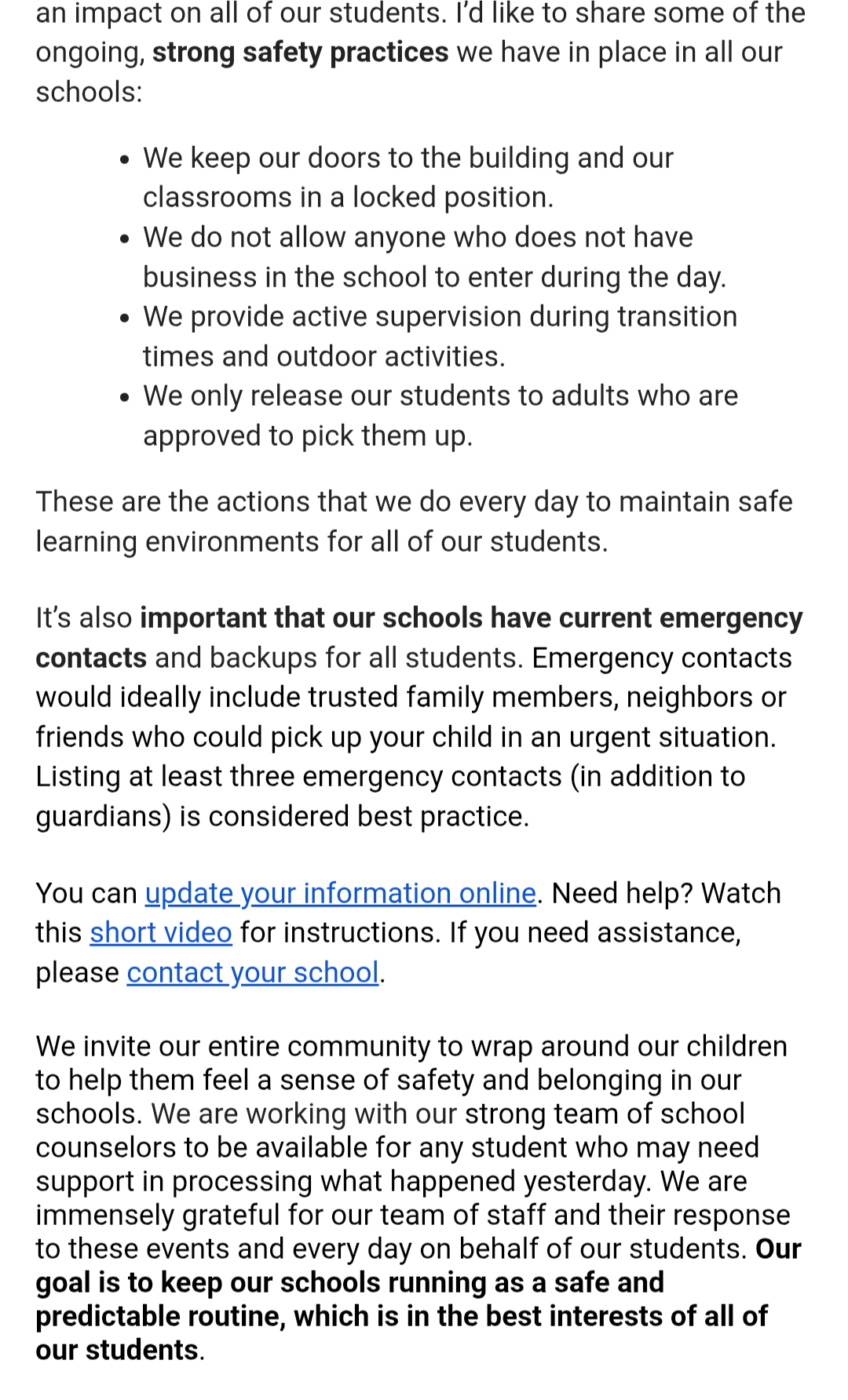
In the hours following the incident, McMinnville School District leadership issued a statement to families addressing reports that a student had been detained by federal immigration authorities. That communication was released before the 911 recording became publicly known and before key facts about the student’s actions were available; pg 1 – pg 2. An internal message to staff was also sent; pg 1 – pg 2.
After the district’s message was distributed, community response reflected heightened fear and concern, including claims that students were being unlawfully detained by ICE and that children were unsafe while traveling to or from school.
The subsequently released 911 call contradicts that narrative.
The district’s early response, made without access to the full factual record, coincided with a surge of community concern that children were being unlawfully detained. The later release of the transcript shows that those fears were not supported by the facts as they are now known.
Federal Authority and Local Limits
Federal agencies such as U.S. Immigration and Customs Enforcement and U.S. Customs and Border Protection (CBP) operate under federal authority. While Oregon law restricts state and local participation in immigration enforcement, it does not nullify federal jurisdiction. An overview of CBP enforcement actions can be found here.
In a July 5, 2025 post on X, ICE’s Seattle field office stated that sanctuary policies limiting cooperation with local law enforcement often require federal immigration enforcement actions to take place within the community rather than at a jail or prison. According to the agency, when cooperation is restricted, individuals who would otherwise be transferred into federal custody during a local booking process must instead be located and arrested outside of detention facilities.
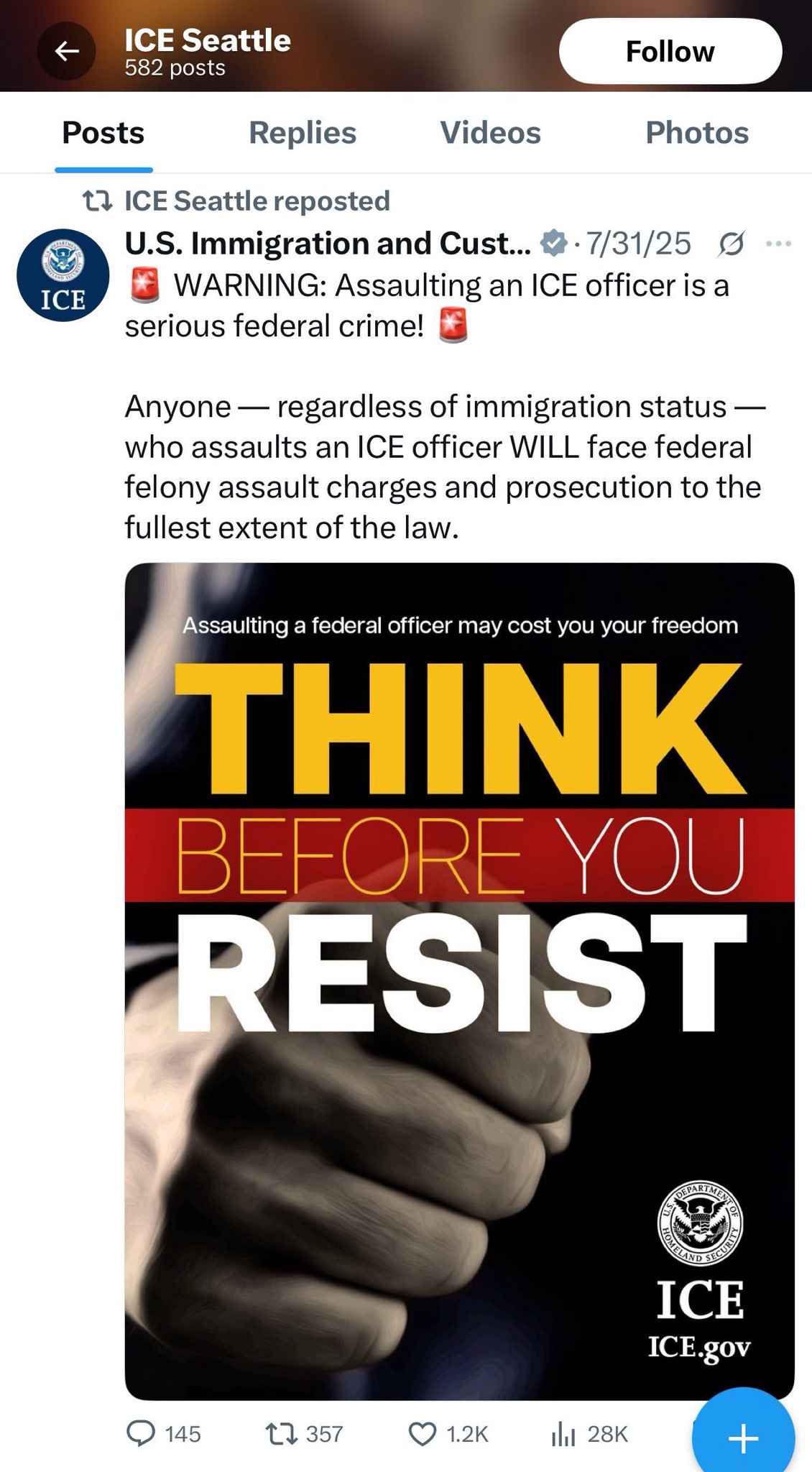
ICE has also stated in public posts that interference with federal immigration enforcement, including blocking vehicles or obstructing operations, can result in arrest or prosecution regardless of sanctuary policies.
The McMinnville incident illustrates the practical and legal tension created when sanctuary laws limit local cooperation but do not eliminate federal authority. It also underscores the risk when public messaging blurs the line between non cooperation by public agencies and actions by private individuals, who remain subject to federal law.
Verbatim Transcript of 911 Call
The following is a verbatim transcript of the 911 call placed by a 17 year old McMinnville High School student regarding Border Patrol activity on Southwest Youngberg Hill Road near Peine. The student’s statements are presented exactly as recorded.
The 911 audio was obtained from a public Facebook post shared by Chaz Gibbons, who stated that the caller’s name and phone number were officially redacted prior to release due to the caller being a minor. Gibbons noted that he did not have additional information beyond the recording and shared it to provide clarity regarding the incident.
[Full transcript follows.]
NOTE: This transcript preserves wording, hesitations, and admissions as closely as possible. Minor filler sounds (“uh”) are retained where they affect meaning.
00:04 – Caller:
Hello. I am by Southwest Youngberg Hill Road in the McMinnville.00:07 – Dispatcher:
Do you have an address or cross street on that road?00:11 – Caller:
Huh? Uh, I’m just stopped in the middle of the road because there’s four vehicles of Border Patrol, um, breaking windows and stuff, getting people out.00:20 – Dispatcher:
Okay. I need a cross street, an address, something like that.
Do you know the last road that you passed?00:28 – Caller:
Uh, it’s just called southwest Youngberg Hill Road. It’s, um, let’s see what’s nearby.00:35 – Dispatcher:
I show you near Peine. Is that correct?00:38 – Caller:
Yeah, near Peavine.00:40 – Dispatcher:
Okay. What’s your phone number?00:42 – Caller:
There’s like ten—ten cars now.00:47 – Dispatcher:
Okay. Tell me exactly what happened.00:49 – Caller:
So, we were driving and my—we took a wrong turn, and as we took the wrong turn, a black SUV blocked us off the road.
And then I pulled up after—I showed up after ’cause my friend called me saying he needed help, and I pulled up and I blocked the SUV in front of him so he couldn’t get out, and then they called out like six other cars, and it’s like ten cars that just pulled—Border Patrol—and they broke my friend’s window and they took them out.01:18 – Caller:
And he’s—he has—he’s a citizen here. Everything.01:23 – Dispatcher:
Okay. And are you wanting contact from one of our officers?01:29 – Caller:
Or if there’s anything you can do ’cause they’re aggressively pushing—pushing him against the car and everything.01:35 – Dispatcher:
Okay. I can have one of our deputies give you a call if you’d like.01:38 – Caller:
Okay.01:39 – Dispatcher:
What is your name?01:43 – Dispatcher:
Okay. I can have one of our deputies give you a call. I don’t want you to engage with any of the agents at all.01:50 – Caller:
Sounds good.01:50 – Dispatcher:
And what is your friend’s name?01:54 – Dispatcher:
Can you spell his last name?01:59 – Dispatcher:
And what kind of vehicle is he in?02:01 – Caller:
A blue Tahoe. Pretty old Tahoe. Like, um, 2000.02:06 – Dispatcher:
Do you know the license plate on it?02:09 – Caller:
I do not.02:12 – Dispatcher:
Okay. I’ll have somebody give you a call. Look out for a blocked or restricted phone number.02:16 – Caller:
Sounds good. Thank you.02:17 – Dispatcher:
Of course. Bye-bye.
Editor’s Note: While some local officials have cited a November 24, 2025 letter from the Oregon Attorney General as evidence of unlawful federal enforcement activity affecting Yamhill County, the county’s district attorney was not a signatory to that letter. Yamhill County is not listed among the jurisdictions asserting oversight or investigative authority in the document.
Photo Credit: ICE Seattle X.com post




Lamont Wolverton
December 22, 2025 at 3:40 pmAfter the McMinnville Police Dept. on Facebook stating the DOJ Federal Oversight and Accountability posting, we were disappointed in the political stance by Law Enforcement especially Sheriff Sam Elliott due to his recent election by the people of Yamhill County. The Sanctuary Laws of Oregon which were never voted on by the people, cause confusion and mistrust of Law Enforcement in their responsibility to Protect and Serve.
It would seem that when Law Enforcement takes an oath to the Constitution they should honor that or resign. At this time there are more that 14 other Law Enforcement agencies that cooperate with ICE, mostly in Florida, Texas and South Caroling, so it can be done.
Also this is especially concerning since the Yamhill County District Attorney’s Office did not sign the letter of Sanctuary intent and Yamhill County was not listed among the jurisdictions asserting oversight or investigative authority as stated in YCN’s article.
Disappointed in our Law Enforcement to keep us safe, but commend the Yamhill County News for an unbiased, truthful and honest article that concerns the community greatly.
Thank You
https://themarkup.org/tools/2025/04/16/law-enforcement-ice-cooperation-tracker